
Massachusetts Expands Recreational Cannabis Limits: What You Need to Know
- The Haven Center

- Apr 20
- 2 min read
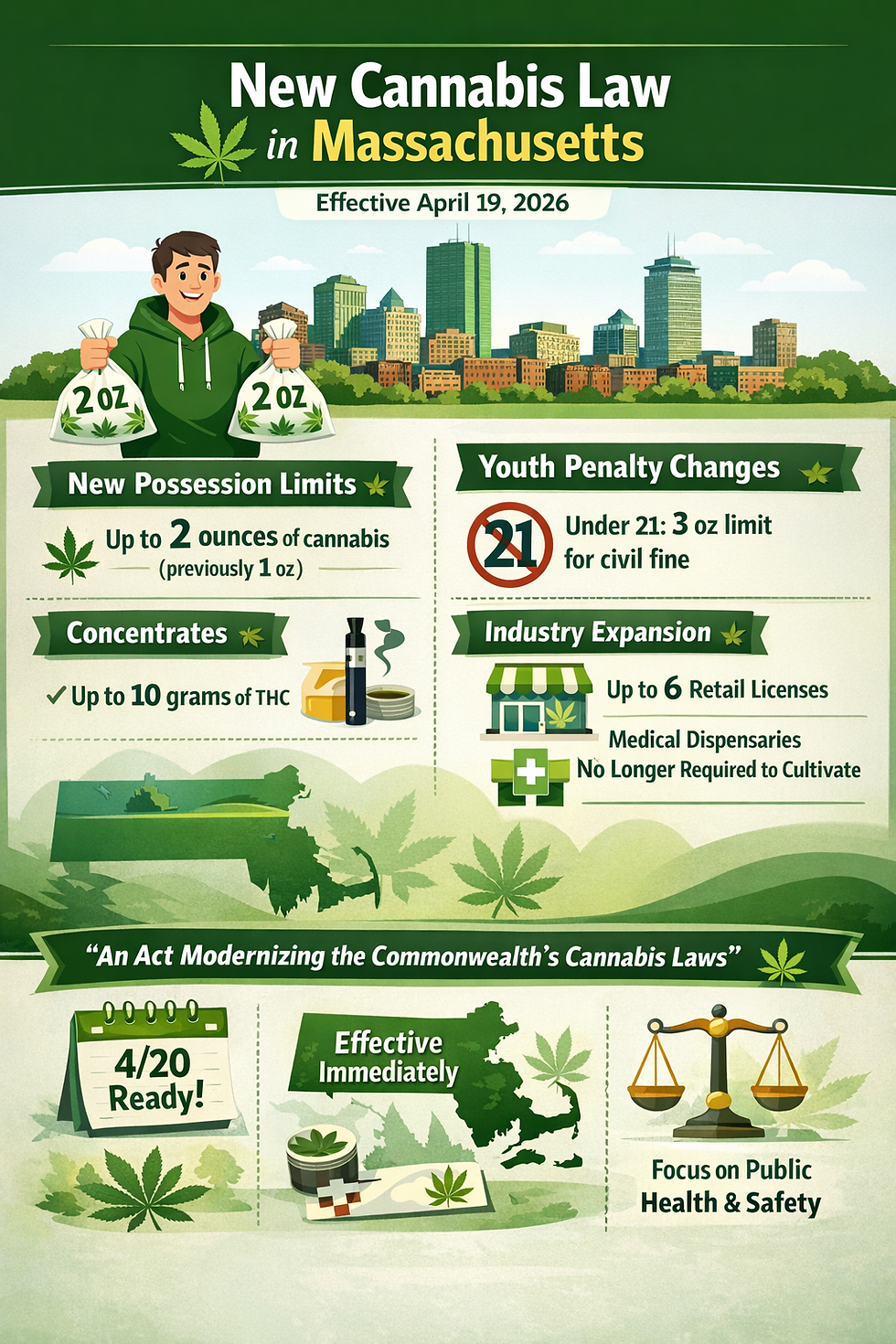
On April 19, 2026, Massachusetts Governor Maura Healey signed new legislation—H. 5350, “An Act Modernizing the Commonwealth's Cannabis Laws”—marking a significant shift in the state’s approach to recreational marijuana. The law, which took effect immediately ahead of the April 20 (4/20) holiday, introduces several key changes that impact consumers, young people, and the cannabis industry alike.
At Haven Center, we believe it’s important to stay informed about policy changes that affect community health, safety, and well-being. Here’s a clear breakdown of what this new law means.
What Changed?
1. Increased Possession and Purchase Limits
Adults aged 21 and over can now:
Possess up to 2 ounces of marijuana in public (up from 1 ounce)
Purchase up to 2 ounces in a single transaction
This effectively doubles the previous legal limit and reflects an effort to align Massachusetts with evolving consumer behavior and neighboring states.
2. Immediate Implementation
Unlike many policy changes, this law:
Took effect immediately upon signing
Was timed just before 4/20, a day associated with cannabis culture
3. Updates to Concentrates and Edibles
The Cannabis Control Commission (CCC) has been tasked with updating regulations around cannabis concentrates and edibles. Early indications suggest:
The allowable limit for concentrates may increase to 10 grams of active THC, doubling previous thresholds
More detailed guidance is expected as regulations are finalized.
4. Changes for Individuals Under 21
For those under the legal age:
The threshold for a civil penalty increases from 2 ounces to 3 ounces
While cannabis remains illegal for this age group, this change adjusts how possession is penalized.
5. Industry Expansion
The law also introduces notable changes for cannabis businesses:
Companies can now hold up to six retail licenses (previously three)
Medical marijuana dispensaries are no longer required to cultivate their own products
These updates are intended to:
Increase market flexibility
Support business growth
Improve competitiveness with nearby states
Why This Matters
This legislation reflects a broader trend toward normalizing and expanding access to cannabis. While these changes may benefit consumers and businesses, they also raise important considerations:
Public health impacts, especially around increased availability
Youth access and perception of risk
Substance use patterns within communities
At Haven Center, we encourage thoughtful conversations about how policy shifts intersect with mental health, substance use, and overall community wellness.
A Balanced Perspective
As cannabis laws evolve, staying informed helps individuals make safer, more responsible decisions. Whether you’re a consumer, parent, or community member, understanding these changes is key.
If you or someone you know has questions about substance use or needs support, Haven Center is here to help.

Comments